

You Meant to Start… So Why Didn’t You? The Psychology Behind Fitness Inaction
Every week, people make the decision to get fitter.
It’s rarely a casual thought. More often, it’s prompted by something that feels meaningful at the time. A drop in energy. A moment of discomfort in their own body. A photo they don’t quite recognise themselves in. Sometimes it’s something more subtle – just a growing sense that things aren’t where they should be.
That moment leads somewhere. They look into options, explore personal training, maybe even reach out and make an enquiry. And when they do, they’re usually sincere. They mean it when they say they want to change something.
But here’s the part most people don’t see coming:
The majority of people who make that decision never actually start.
Not because they change their minds in any conscious way. More often, it’s because nothing happens quickly enough for the decision to take hold.
What the data quietly tells us
Across the fitness industry, there’s a consistent pattern. When someone enquires about joining a gym or working with a personal trainer, only around 20-40% go on to actually get started. That means the majority - around 60–80% - never take that next step to see a change.
At first glance, that might sound like a sales problem. But when you look more closely, it’s not really about persuasion or pricing. It’s about timing.
Most of the people who do start tend to do so quickly. Within a week of reaching out, sometimes even within 24–48 hours. There’s a natural momentum to their decision, and they move with it.
But when that momentum isn’t used, something else happens. Data from class-based training environments shows that if someone hasn’t attended a first session within roughly 10 to 14 days, the likelihood of them ever starting drops significantly <20%. By the time a month has passed, most of those initial intentions have faded entirely.
So the real question isn’t why people don’t want to start.
It’s why something that felt important just a couple of weeks ago can quietly disappear.
The gap between deciding and doing
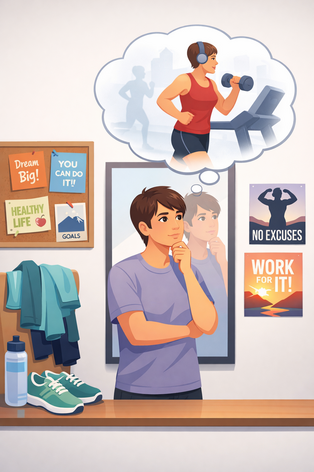
In behavioural science, this is known as the intention–action gap; the space between what we say we want to do and what we actually follow through on.
It’s been studied across health behaviours for years, and the findings are remarkably consistent. Around half of people who intend to make a positive change to their health never act on it.
This isn’t about willpower in the way most people think of it. It’s not a question of discipline or character. It’s a reflection of how human behaviour actually works.
Making a decision is a psychological event. Acting on it requires navigating real life – with all its competing demands, distractions, and uncertainties.
And that’s where things begin to drift.
The moment that starts it all
Most decisions to get fit begin with a surge of clarity.
For a short period of time, things feel obvious. The reasons for starting are clear, the benefits feel important, and the barriers seem manageable. This is what psychologists often describe as a motivation spike - a temporary rise in the desire to change.
It’s in this window that people take their first step. They search, they read, they enquire.
But motivation of this kind is not designed to last. It’s a response to a moment, not a permanent state.
If nothing happens next, that clarity begins to soften. Not dramatically, but gradually. Other priorities reassert themselves. The urgency fades. The emotional weight behind their decision becomes less immediate.
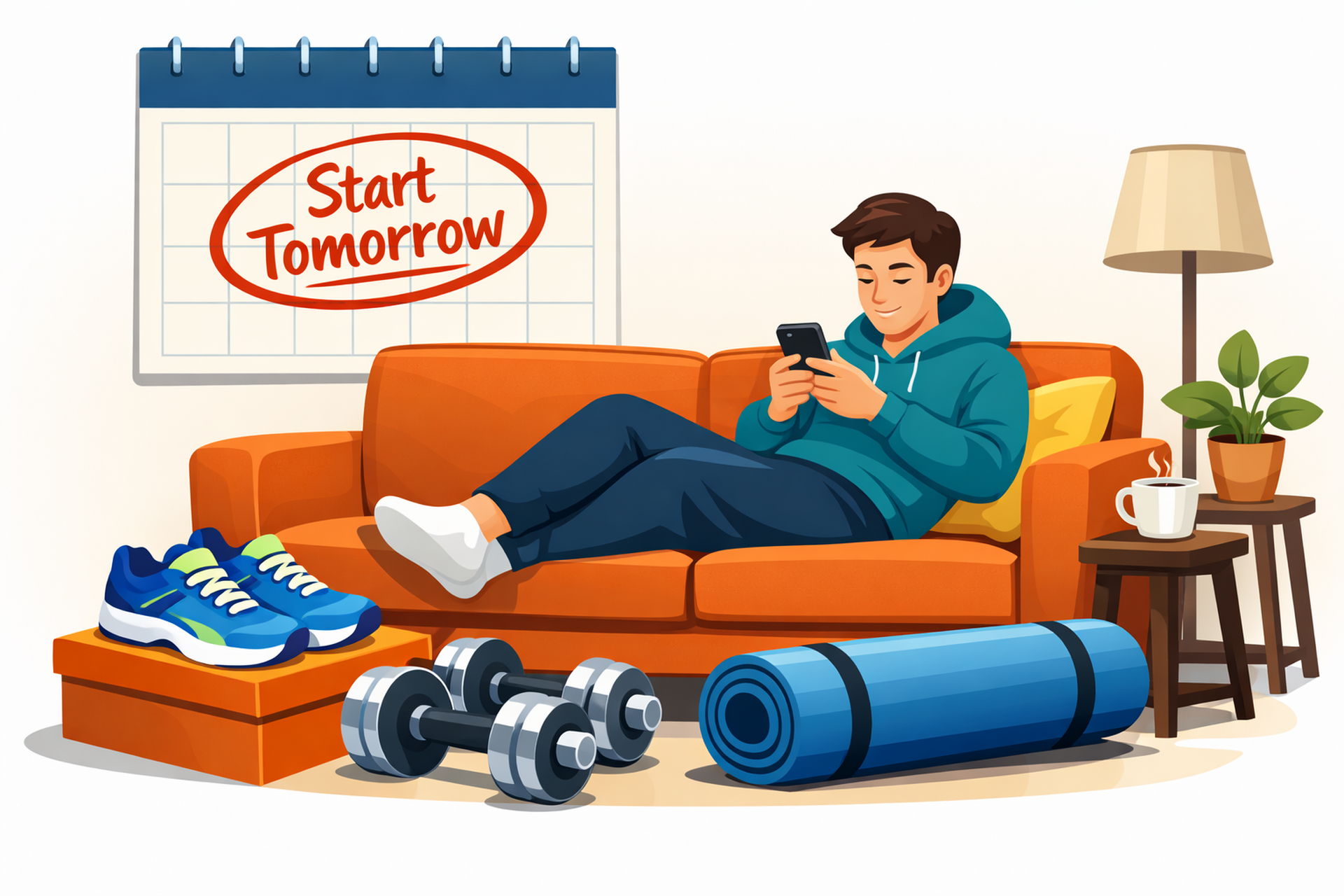
Within a few days, the thought shifts from “I’m doing this” to “I’ll look at this later.”
Within a couple of weeks, it often becomes “I just need to find the right time.”
And eventually, it disappears into the background entirely.
Why starting feels harder than it should
So, if your desire is there, why don’t you take action?
Part of the answer lies in something simple: starting something new carries friction.
It requires stepping outside of your normal routine and experiencing a slight discomfort. It involves committing time in a busy schedule that already feels full. It often means entering an environment that feels unfamiliar, even if only briefly. There can be an underlying concern about fitness levels, confidence, or simply not knowing exactly what to expect.
None of these barriers are overwhelming on their own. But together, they create just enough resistance to delay action, and park it for “another time” - which ultimatley rarely arrives.
Delay, in this context, is powerful.
Because the longer something is delayed, the more the brain begins to reframe it. What initially felt like a priority starts to feel optional. What felt urgent starts to feel flexible. And what felt like a decision becomes something that can be revisited later.
The role of human nature
There’s also a deeper psychological force at play.
As humans, we are naturally wired to prioritise what feels immediate. In behavioural economics, this is referred to as present bias - our tendency to favour short-term comfort over long-term benefit.
Exercise sits right in the middle of this conflict.
The effort is immediate. It asks something of you now.
The reward is delayed. It builds gradually over time.
Even when someone genuinely wants the outcome - to feel fitter, stronger, healthier, or more confident - the brain subtly leans towards postponing that feeling of discomfort in favor of immediate comfort.
Not permanently. Just for now.
But the 'for now' has a habit of becoming much longer than intended.
The step that changes everything
What’s often misunderstood is where the real difficulty lies.
People assume the hard part is maintaining consistency over weeks and months. They imagine the challenge is staying motivated, pushing through sessions, or sustaining results.
In reality, the most difficult part is much earlier.
The hardest step is the first one.
That first step will always carry a feeling of discomfort, but by taking that first step it removes uncertainty.
Once someone has walked through the door, met a coach, and completed a session, the unknown becomes known. The anticipation – which is often the heaviest part – disappears.
They realise that it’s manageable. That they’re capable of far more than once thought. That the environment is supportive rather than intimidating. That the version of this in their head looked very different, and more difficult than reality.
From that point on, the challenge is no longer about starting. It’s about continuing something that has already begun. You only need to look at Newton’s First Law of Motion aka. The Law of Inertia to appreciate an object in motion will stay in motion, and an object at rest will stay at rest – which are you?
What we see in practice
Working with our members here at Hall Personal Training, there’s a consistent pattern that emerges over time.
The members who go on to make meaningful, lasting progress are not necessarily the most motivated at the start. They’re not always the most confident, and they’re rarely the ones who feel 'fully ready.'
What sets them apart is something much simpler.
They act while the intention is still fresh.
They don’t wait for the perfect moment, they don’t need to 'go away to think about' because they recognise - consciously or not - that the perfect moment tends to pass, and this is something they know they need to do, so what good will waiting do??
And almost without exception, when they look back, they arrive at the same conclusion:
They wish they had started sooner.
Not because the process is effortless, but because the delay was unnecessary.
If this feels familiar
If you’ve found yourself thinking about getting started, but haven’t quite taken that step yet, you're not alone...
What you’re experiencing is the same pattern we see time and time again - where around half of people who intend to improve their health never act on it, and up to 80% of those who want to get fitter and stronger never actually begin.
They all had a genuine intention, that was soon followed by a gradual loss of momentum as time passed.
The important thing is recognising it while the decision still has some weight behind it.
Because once that initial reason for starting fades, it becomes much harder to return to it - trust us.
A different way to think about it
Starting doesn’t require certainty.
It doesn’t require perfect timing, a perfect plan, or a completely clear path forward.
It simply requires a willingness to take a small step before the moment disappears.
That might be a conversation.
It might be asking a question.
It might be coming in to see what we’re all about.
But it’s that step - taken at the right time - that changes everything that follows.
If you’re considering it
If improving your health, fitness or energy is something that still matters to you, the most valuable thing you can do is act while that intention is still present.
You don’t need to commit to everything.
You just need to begin.
If you’d like to explore what that could look like, you’re always welcome to have a relaxed, no-pressure conversation with us.
Book a call with me and let's see how we can help you get started.
We're here helping the people of Oxfordshire take that step between intention to implementation.